
Photo trips: a practical guide
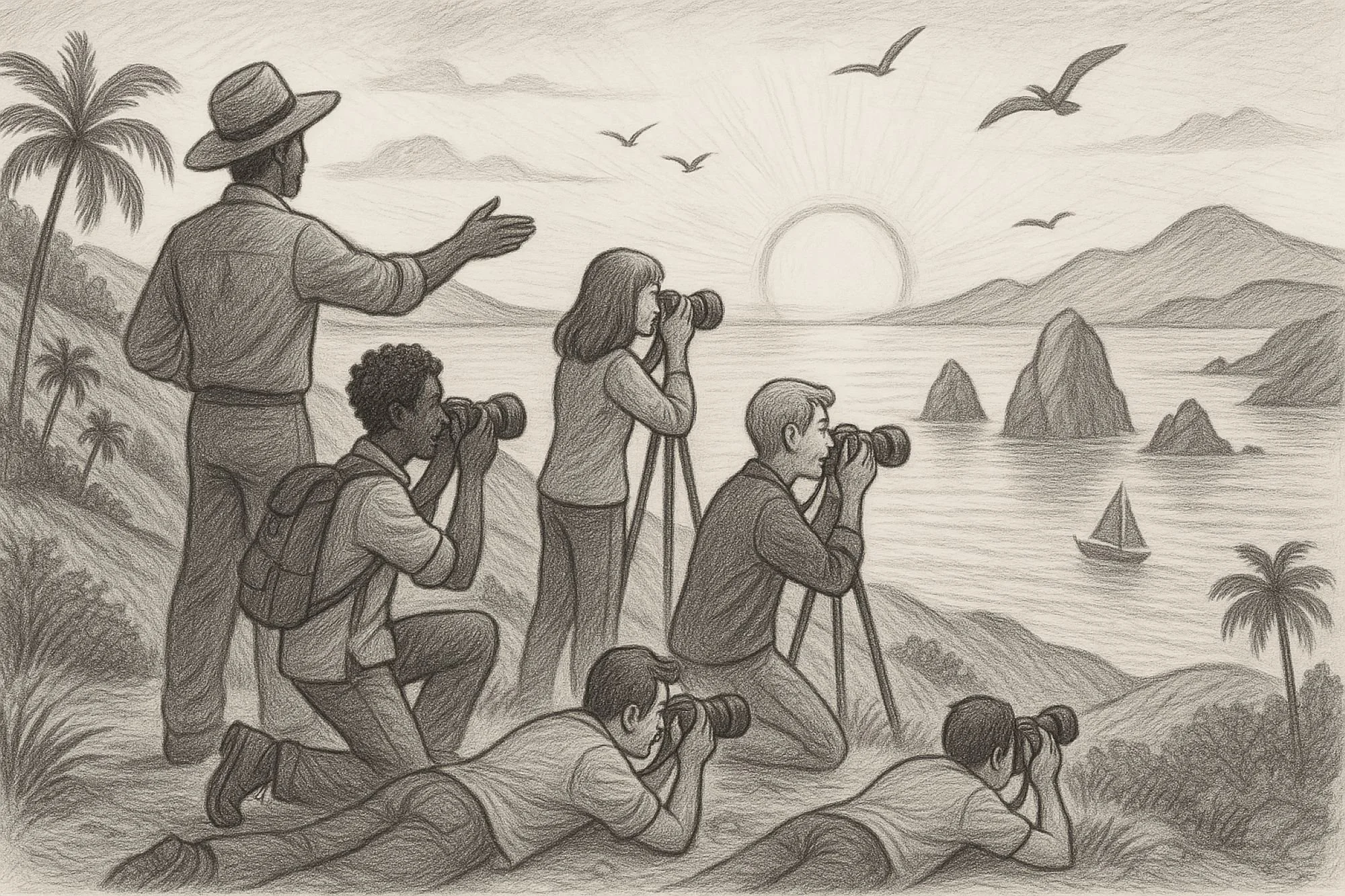
Are you scrolling through Instagram and seeing ads for photo trips? Do you get newsletters that make you drool over dream itineraries to the most attractive destinations? Are you seriously considering signing up for one of these trips? Does the idea of traveling with strangers make you nervous because you don’t know what to expect?
An organized photo trip can be a fantastic experience… or an expensive headache. Here’s a practical guide—based on my wins and my missteps—to help you choose well (or decide it’s not for you).
What is it?
It’s a group trip where you usually won’t meet your travel companions until it starts. Photographers didn’t invent this, of course—most agency-organized trips work this way. What sets a photo trip apart from a “regular” one is the emphasis on finding places where you can spend time taking pictures. For example: while a standard trip might include a morning in a museum, a photo trip might take you to a market so you can shoot street photography.
For me, a one-day workshop, a weekend getaway, or a long haul to the other side of the world can all fit the definition of a “photo trip.” It’s less about the duration or destination and more about the focus on making images.
Do I have to be a photographer to enjoy a photo trip?
As in, if the photographer is my dad/girlfriend/friend and I’m the +1, will I be bored?
In my opinion, no. First, you’ll see very interesting places; you can pull out the phone in your pocket and get cool shots—and if not, you can just look with your eyes, which we sometimes forget to do.
That said, photo trips usually run at a slower pace than “normal” travel, for the simple reason that to make photos you have to stop and observe. That’s not everyone’s cup of tea. When in doubt, review the proposed itinerary. It sounds obvious, but I’ve met people who don’t—and then complain about spending half a day at place A instead of doing a quick stop and squeezing in place B.
Basic checklist to choose well
1. How “photographic” is the photo trip?
If a trip is marketed as photographic, it shouldn’t be just because it includes stunning spots where you can make envy-inducing images for the office; there should also be instruction led by a professional, ranging from simple technical advice to detailed teaching. So look into the leader’s background—both as a photographer and as an educator. Knowing a lot about a subject is one thing; being able to teach it is another.
2. What’s the photographic focus?
Photographers usually specialize in a genre and will design the trip around their strength: landscape, wildlife, street, night, macro… The trip will feel very different depending on this. A photo safari means hours in vehicles and patience for wildlife; street means lots of city miles on foot. Sunrises insist on being very early, forests have unpaved trails, night photography means hours (and cold) standing with a tripod in one spot. Ask yourself if you want to learn that dominant style and—very important—if you have (and know how to use) the essential gear (focal lengths, tripod, filters, flash, remote trigger…). A good organizer will give you a list of what’s essential and what’s optional.
3. What technical level is required?
Ask about the level expected and make sure you’ve got the minimum to enjoy it. No matter how excited you are, if the trip requires prior knowledge you don’t yet have, you won’t get the most out of it. Most trips are beginner-friendly, but some that are very technical are not. It also depends on the participants. If everyone has lots of experience and you’ve just bought your first camera, you might feel out of place. Ask freely so you don’t end up like I did at my first landscape workshop: surrounded by folks with top-tier gear and tons of mileage, and I couldn’t keep up. A pity.
4. What are the trip requirements?
Basic, very basic: physical fitness. Says someone who went from watching cat videos online to trekking in the Annapurnas and lived to tell the tale. But it’s not just that: the type of lodging matters too. Maybe sleeping bags are required and you don’t like camping. Or rooms are shared and you can’t stand snoring. Will it be very hot or very cold? Could altitude be an issue? What about transport—private or public? Long hours in the car? I remember a trip with a water activity every day and one person in the group felt seasick just thinking about it. Imagine the ordeal (for the person and the guide).
5. How many people are going?
Group size is critical. If it’s fifteen people or more, I’d say forget it. It’s impossible for the leader to give everyone meaningful time in such a crowd—especially with mixed skill levels and everyone using different gear (and many haven’t even read the manual). My sweet spot is five to eight. I can tolerate up to ten. More than that, I don’t recommend.
6. Who’s on the team?
The quality of the guide/organizer is another key point. I once had a disastrous trip because the organizer was a free spirit who knew as much about logistics as I do about alpaca farming. No restaurant bookings, poorly prepared routes, people getting dropped and constant regrouping… Not my thing—though I know others love that laid-back vibe. So it’s less about “good” or “bad” and more about whether their style fits you. My recommendation: talk to the organizer beforehand, ask people who’ve traveled with them, and start with a short outing—a day or weekend workshop—before you commit to a long trip. Many photographers who run trips also have books and online courses which, compared to a trip, are a small investment where you can see their knowledge and style first-hand. That way you’ll know if it’s a match.
On the best trips, responsibilities are split: the photographer handles the photo side, while another team—often local—handles logistics: transport, tickets, restaurants. Ideally that local team includes a licensed tour guide who can complement the photographer with first-hand context about the places you visit. One obvious thing to bear in mind is language. Local guides often won’t speak your native tongue; if you don’t speak English, you won’t be able to communicate directly with them. On one trip with, arguably, the worst group ever, there was a guy who didn’t speak a word of English and expected the Spanish guide to be at his beck and call all day—from explanations to ordering a beer. José Luis, why didn’t you stay home?
7. What’s the itinerary like?
On a photo trip, plans sometimes don’t pan out. Sunrise/sunset/Milky Way shoots are classic examples. No matter how well planned, if it rains or it’s cloudy, there’s no photo. So is there a plan B? It’s important that the organizer has alternatives for force majeure. Are transfers realistic? This didn’t happen to me, but I heard of a trip where they drove every morning and reached the destination mid-afternoon—just as everything was about to close.
It’s also essential that, even if there’s a local guide, the photographer knows the area—not only to show the best locations (that too), but above all to avoid problems. It’s their responsibility to make the trip go well. It sounds obvious, but you’d be surprised how brazen some agencies can be. A fellow traveler told me she was stranded in Ethiopia after a vehicle breakdown in an area with no cell coverage, and the guide—who didn’t know the country—had no idea how to get out of the jam. He had worked in Kenya and, “since they’re neighboring countries,” assumed Ethiopia would be the same. No comment.
8. What’s included and what isn’t?
Another basic: what does the trip fee include? It’s very common for the international flight to be on you—travelers start from different places. Travel insurance (essential. “Nothing has ever happened to me” is not a valid reason. Get travel insurance—and make sure it covers your photo gear for theft and damage) is usually each traveler’s responsibility. It’s very important to get detailed information about what’s included and what isn’t: visas, accommodation, single-room supplements, food, drinks, tickets, permits, transport, tips…
Speaking of tips: even if the paperwork says they’re included, in my experience the group often pools money at the end to give to the local guide and the driver. It’s a nice gesture, especially in less developed countries. I’m all for it.
It’s also nice when the trip includes optional add-on activities. Sometimes there’s a morning or afternoon of “free time” you can use on your own or for one of these extras. They’re additional costs, of course, but having options says a lot about the care the organizer puts into creating a memorable experience.
9. What if I can’t go in the end?
A clear cancellation policy is a must—i.e., under what conditions you’ll get your money back or not. Your travel insurance (right?) will also specify what situations qualify for a refund. All those things that never happen—until the airline goes on strike, you twist an ankle, or you get called for jury duty. I flew to Jordan on October 8, 2023. Remember what happened in Israel the day before? Exactly. In this case the trip wasn’t canceled, but the agency in Spain was in constant contact with the consulate to make sure there was no risk and, even so, a planned excursion to the Jordan River was replaced with a visit to Madaba, just in case (I was thrilled: the Jordan is a stony bank with brown water, and St. George’s Church in Madaba has the oldest preserved map mosaic of Palestine. Wheeee…).
10. Will there be review/editing sessions?
A specific feature of photo trips is that at some point the group gets together to review images, make selections, suggest—or even do—post-production. On landscape or street trips, maybe not; but on more technical ones—night, high-speed, macro—it’s likely you’ll spend a few hours learning how to process the images. If that’s not your thing, or you’re the +1, you’ll need an alternative. In any case there should be a sensible balance—don’t spend too many hours on it. You shouldn’t be forced to lug a laptop either, though carrying a card reader is recommended.
Summary
Most of the ten points above are common sense you probably already practice, but there are a few photo-trip specifics worth keeping in mind.
Although the examples I’ve shared are all negative, my overall experience has been anything but—quite the opposite. I’ve highlighted those moments precisely to show why it’s important to think through each point. Here are the most critical ones at a glance.
Red flags
Groups of 15 or more, or “open slots.”
Itineraries with five locations a day plus long transfers: that’s “express tourism,” not photography.
“We’ll play it by ear” for critical light windows (sunrise/sunset…).
No detailed budget and no clear cancellation policy.
Guide with no teaching experience and/or no local expertise.
Green flags
Schedules with enough time and arrival hours that make the best light usable.
Planned review/critique sessions that aren’t excessive (it’s a trip, not a theory workshop).
Serious local partners for logistics and safety.
Clear, timely pre-trip communication in writing.
A few examples
Below are a few names I’ve traveled with personally, plus others on my to-do list when life allows. I get nothing in return for these mentions; I haven’t even told them they’d be here. I’m sharing them because my experience with them has been very positive (listed alphabetically):
Marina Cano.— A wildlife photographer in love with Africa. In addition to workshops in Spain, she runs small-group safaris for six people in Kenya. I’m dying to visit Masai Mara and Amboseli with her because I took one of her workshops in Spain and loved her technique. And no, we’re not related.
Álex Montañés (Trekking Aragón)/Ana Arbonés (Fotonistas).— Álex is a geologist, photographer, and mountain guide. Ana is the heart of Fotonistas and equally passionate about photography and nature. They run one- or two-day landscape trips in the Aragonese Pyrenees, which they know like the back of their hand. They offer several routes year-round, but my favorite is the autumn color in Ordesa–Monte Perdido.
Germán Ruiz (Fotomundos).— He focuses exclusively on Asia. At the time of writing he has routes in Vietnam and Cambodia, Nepal, and Kyrgyzstan. Groups of six, with extraordinary local guides (a hug to Hung, Babu, Bun). Very people-centric: everyday life, getting close, making portraits. Itineraries planned to the millimeter.
Rober Tomás.— Street-photography specialist. My recommendation is his one-day workshops around Spain (small groups, fast pace, constant feedback)—great for learning a lot in a short time. He also runs longer trips (Florence, Porto, Bosnia, North Macedonia…), designed for those who want to focus 100% on street. Trip groups are usually 10–12 people.
This list is based solely on my own personal experience, specifically where that experience has been positive. There are many other people organising trips out there, and I’m sure they are excellent, but I’m only mentioning the ones I know personally and have genuinely liked. I wish I could provide a comprehensive list, but that is simply not the case. So, please, I beg of you: don't write to me saying, "You’ve left out So-and-so; I went to Cuba with him and he’s wonderful." If they aren't on this list, it’s simply because I don’t know them, I haven't been to Cuba with them, and I don't plan to. Or, perhaps I did go and I didn't like it, something I'm not going to write about here. And if, on the contrary, you've had an experience with these people that wasn't as positive as mine, I am sorry. It is simply proof that organising trips is not an exact science.
A few final notes
Most of this article covers how to choose a good trip, but here’s a short gear checklist that’s easy to forget:
Several medium-capacity memory cards are better than one big one.
Several batteries and two chargers—one in checked luggage and one in your carry-on (you’ll thank me later). Batteries must go in your carry-on.
A universal plug adapter.
A basic cleaning kit: microfiber cloth and a soft brush. A blower is useful but not essential (the inexpensive pharmacy ones work great).
Protection against dust/rain for your phone, lenses, and accessories. There are dedicated dry bags, but zip freezer bags also do the trick.
Something to back up your photos as the trip progresses—a portable drive, your phone, or a tablet. Do a daily dump each night to avoid heartache.
That’s my two cents on organized photo trips. I hope this helps if you’re considering one and still on the fence.
Notes:
The opening illustration was generated with Sora AI.
This article contains no affiliate links.
