
5’ with… Abelardo Morell
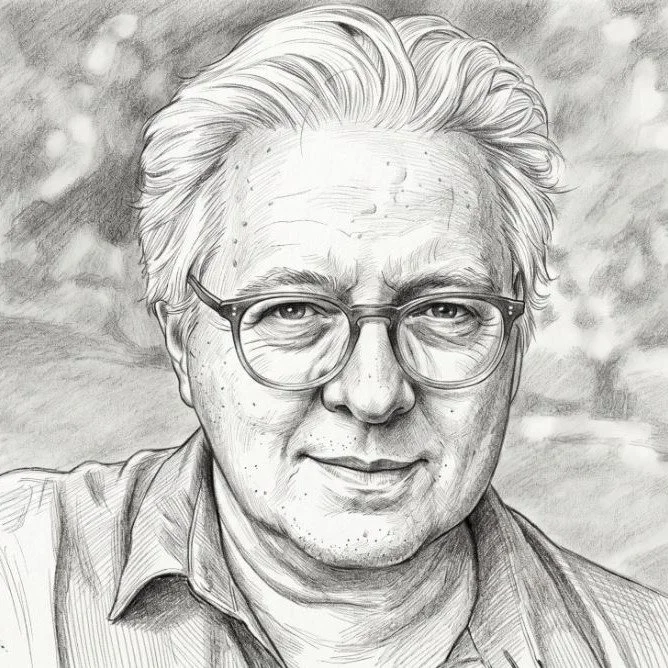
I am extremely happy to open a new subsection in the blog where I will be interviewing artists I admire. I’m really honoured that Abelardo Morell agreed to open it answering some questions via email.
Abe Morell (b. 1948) is a Cuban-born American photographer world-renowned for his innovative approach to the most fundamental principles of optics. After fleeing Cuba as a teenager, he developed a prolific career, eventually becoming a professor at the Massachusetts College of Art and Design. He is perhaps best known for his mesmerising Camera Obscura series, where he transforms entire rooms into cameras, projecting inverted landscapes onto interior walls to create a surrealist dialogue between the private and the public sphere.
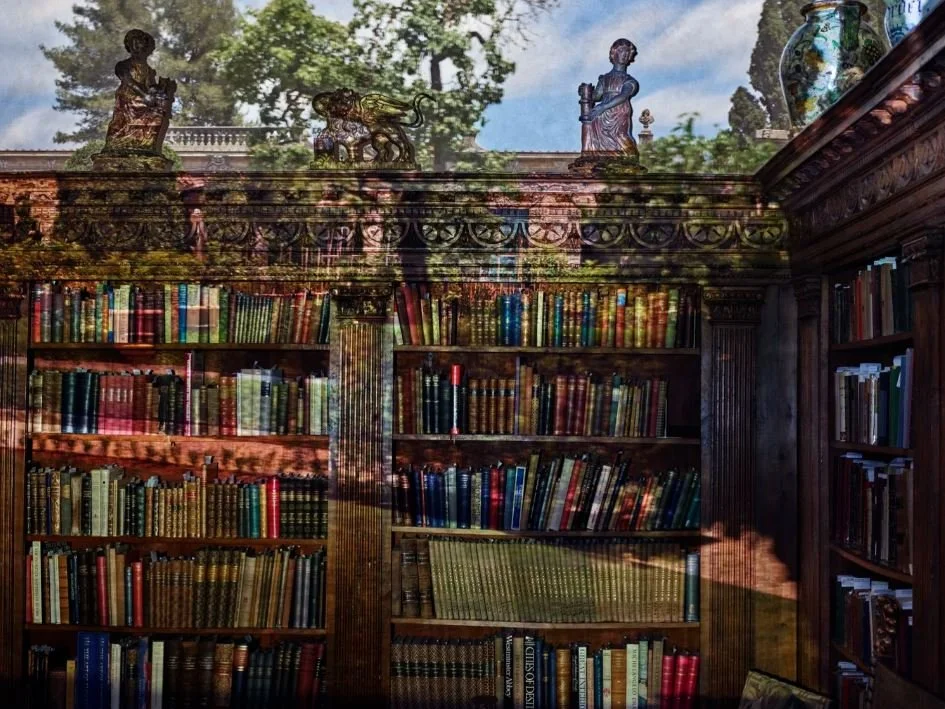
Camera Obscura: View of Rear Gardens in Studiolo Library, Villa La Pietra, Florence, Italy. ©Abelardo Morell, 2017
His work is a masterclass in patience and technical ingenuity, ranging from the domestic intimacy of his early black-and-white images to the rugged, textured projections of his Tent Camera project. Morell’s photographs are held in the permanent collections of the MoMA, the Whitney Museum, and the Metropolitan Museum of Art. His practice continuously challenges our perception of reality, proving that even in a digital age, the primitive wonder of light remains the most powerful tool in a photographer's arsenal.
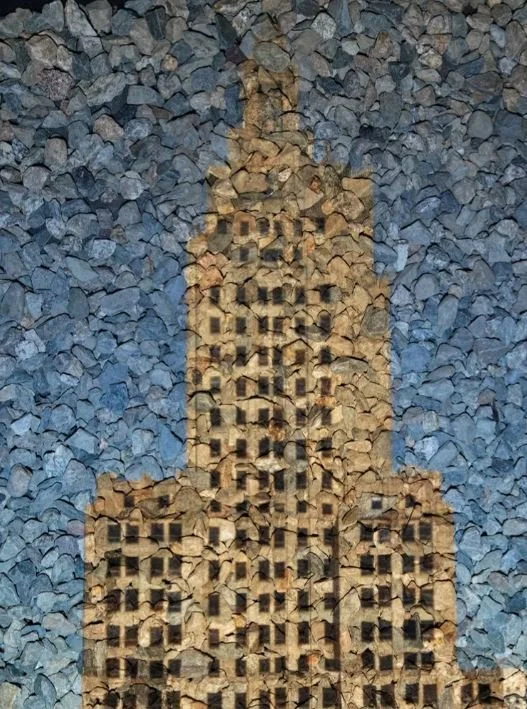
Tent Camera: Industrial National Bank Building, Providence, RI. ©Abelardo Morell, 2023
I admire his approach to photography, artistic but playful at the same time, aesthetically pleasing and with deeper layers of meaning. I’m particularly fond of Tent Camera. Please have a look at his work here.
So, without further ado, a warm welcome to Crooked Horizons for Abelardo Morell:
You have often mentioned that the idea for Camera Obscura came from teaching the principles of photography to your students. Then, in 1991, you started the actual project. What was the artistic inspiration for that? The actual wonder of the principles of the camera obscura, the link between in and out? What was it that made you tick?
In the late 1980’s I started to show my students some of the fundamental principles of Photography by turning our classroom into a giant Camera Obscura. Then I would make a hole about the diameter of a small coin. The whole thing felt primitive and fun - Seeing the amazing reactions from my students when the scene outside with people walking and traffic all upside down made me understand how deep the effect was even to even very hip and savvy young people. I incorporated this lesson to all my classes. In 1990 I thought that it would be interesting to make a photograph of this effect in a room. It took some time to prepare my approach. I first made a picture of a Box with a lens looking at a lightbulb which I also made for the students. In 1991 to make them see how simple and beautiful photography was -I started experimenting with getting an image inside a room- With B&W film my exposures were about 8 Hours long. I just love the idea inherent in the process where, naturally the Outside and the Inside meet each other in a strange marriage. Two opposite things becoming one!
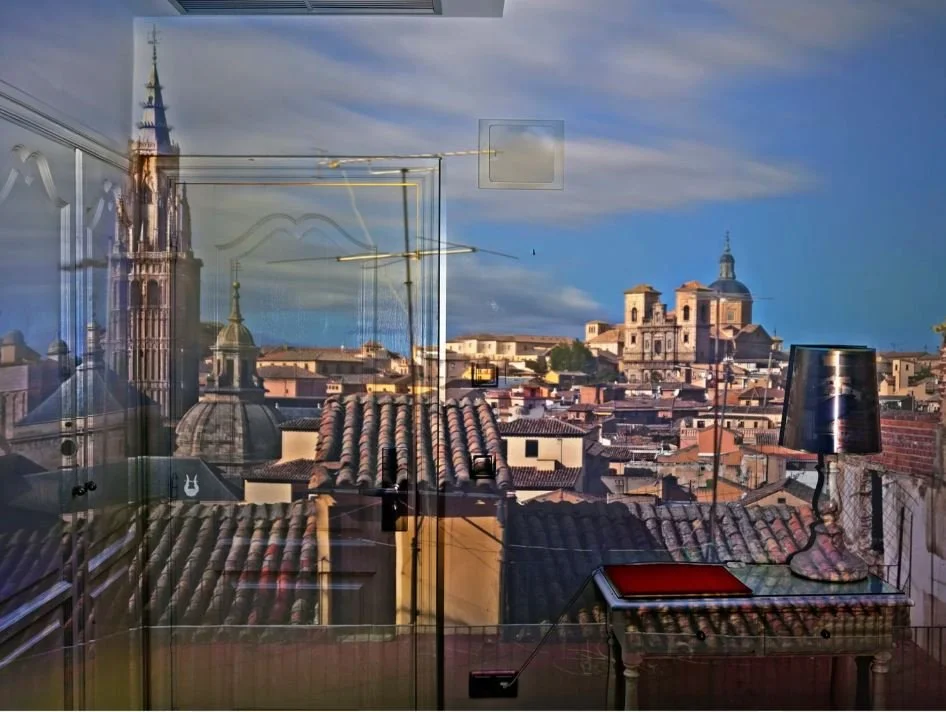
Camera Obscura: View of Toledo in Hotel Room, Toledo, Spain. ©Abelardo Morell, 2013
You have been exploring this concept for many years now. Is it over now? Do you still feel inspired by the "magic" of the camera obscura? Are you still looking for "marriage candidates"?
Over the years I have refined techniques to improve my Camera Obscura Pictures. Instead of simple holes I replaced them with actual lenses that I had especially grounded to focus the incoming projection more sharply. In some case, with the use of a large Prism I could invert the image right side up. I have been using Digital camera since 2010 - with this technology my exposures are now reduced to a few minutes which changes the nature if the incoming imagery. With the long exposures of film my skies were always blank -with short exposures things like clouds, particular light ,etc are present making the images more interesting. I have been making fewer Camera Obscura pictures lately- In 2010 In designed another device I call a TENT/CAMERA which allows me to project things like landscapes directly unto the ground beneath- The results are unusual combinations of view and ground
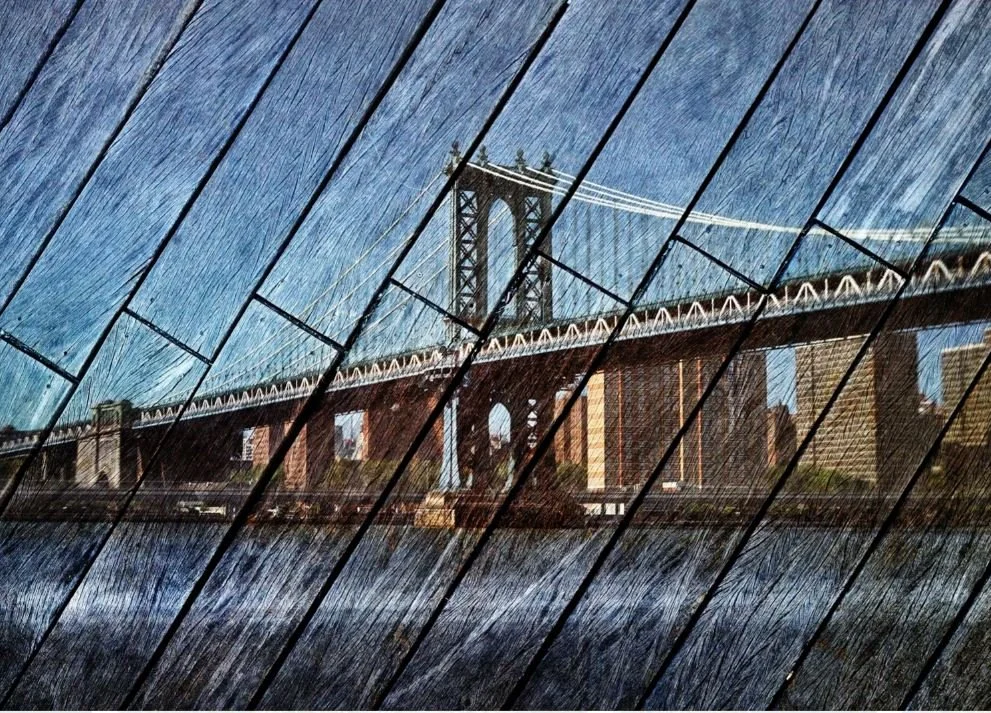
Tent Camera: The Manhattan Bridge on Wood Boards. ©Abelardo Morell, 2015
3) How do you choose the locations? Some seem marked by the importance of the outer landmark, but in others, like the pictures at Whitney Museum, the Empire State, the Golden Gate, Santa Maria della Salute and many others, there is an actual dialogue between both spaces. There are layers of meaning in the photographs. Can you describe the planning process behind the shot? How much of it is technical engineering (calculating light, angles, exposure) and how much is pure intuition?
In certain pictures the room pictured and the view that shows up inside are visually related by design and research. I have often scouted sites that had rooms looking at something very specific- That takes a lot of knocking on doors and trials - My first concern is usually what the room is facing- In the best ones the room and the view are good with each other.
4) Your recent work is very different. It feels like an approach to cubist painting, exploring just form and color. What can you tell us about it?
In the last few years I have been making work that sits well with painting- My library is Huge with mostly Art Painting books. I ‘m driven to find visual ideas that mostly modern and contemporary painters work with - I am liking a certain way of finding abstraction and unreal looking worlds! Ultimately I am a photographer. I rely on the camera to push limits off expression. I love the reality of the surfaces that I photographs so that the base is ultimately a real thing that only a lens can describe beautifully!
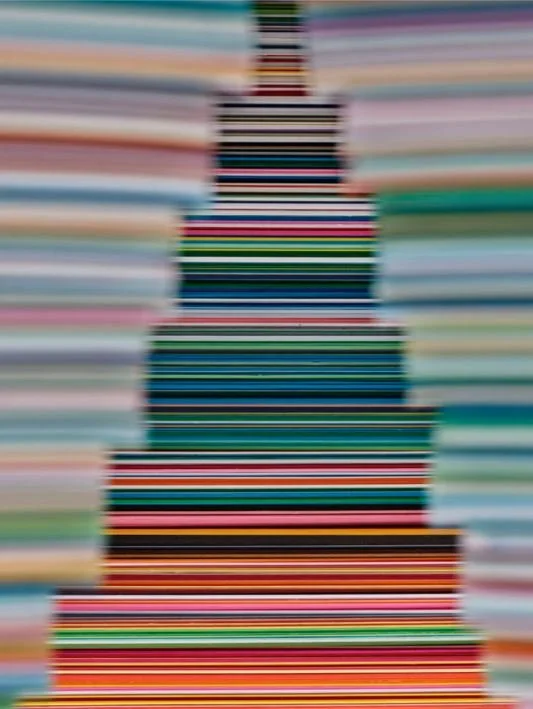
Color Paper Abstraction #13. ©Abelardo Morell, 2025
Once again, my heartfelt thanks to Abe for accepting this little collaboration. I’m looking forward to continuing this conversation with him soon!
PS: all photographs belong to the artist and have been reproduced here with permission. The illustration that opens the article has been generated by Artlist.io based on this portrait.
